


A functional mudroom should be stylish transition that bridges your outdoor and indoor spaces while keeping your home organized and clean. The goal is to create a room that works hard and looks great. Here’s how to design a functional mudroom with both utility and aesthetic appeal.
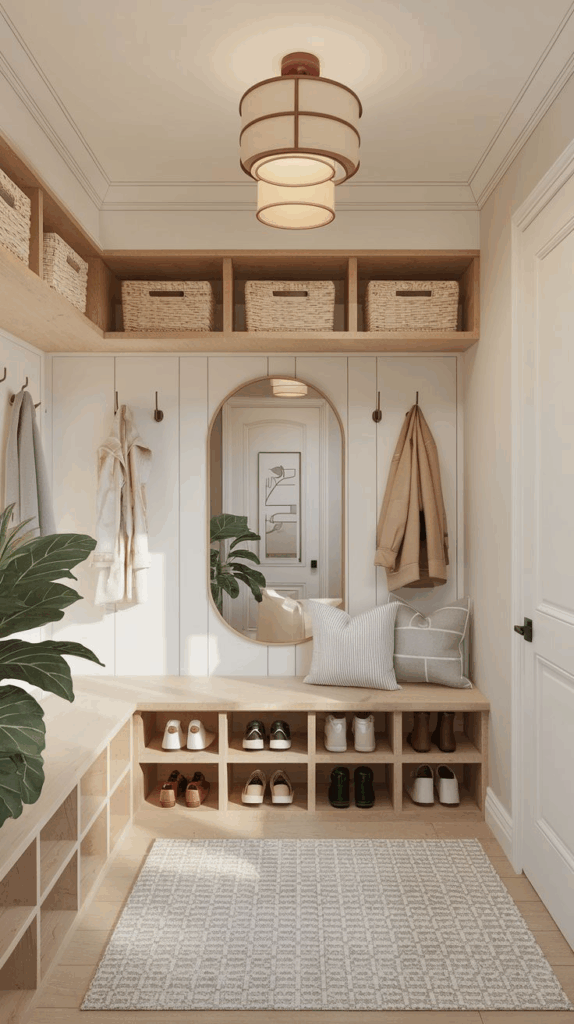
Plan With Purposeful Zones
Start by defining how your functional mudroom will be used:
- Drop Zone: A bench or countertop to unload bags and groceries.
- Seating Area: A built-in or freestanding bench with hidden storage underneath.
- Storage System: A combination of cubbies, lockers, hooks, and drawers ensures everything has a place.
Balance Open & Closed Storage
Mixing open cubbies and closed cabinets achieves organization and a clean look:
- Open Storage lets you grab items quickly—great for backpacks or baskets.
- Closed Storage conceals clutter with sleek doors or shutters.
Use ventilated locker doors so damp items can air out.
Choose Durable Materials
A functional mudroom must handle heavy wear:
- Flooring: Go with tiles, slate, or washable rugs—all durable and easy to clean.
- Hardware: Use quality hooks and cabinetry that resist moisture and maintain their look over time.
Add Practical Features
Make daily routines easier by including thoughtful extras:
- Bench with Shoe Storage: A built-in bench with cubbies underfoot adds seating and helps with putting on shoes.
- Charging Station: Hide outlets and USB ports in lockers for seamless tech tidy-up.
- Cleaning Area: Consider a small sink for rinsing off muddy gear or caring for pets.
- Family Command Center: A wall-mounted board or desk space can help keep everyone’s schedule centralized.
Inject Style & Personality
A functional mudroom should feel welcoming and classy:
- Color & Texture: Bold paint, wallpaper, or board-and-batten can bring character.
- Lighting: Use stylish pendant or sconce lighting to brighten the space.
- Decor: Add artwork, full-length mirrors, and decorative bins to elevate the feel.
Avoid Common Design Pitfalls
To maintain both form and function in your functional mudroom, avoid these common mistakes:
- Neglecting space flow—ensure there’s room to navigate in and out.
- Underestimating storage—plan for seasonal gear and guests.
- Choosing non-durable materials—stick with hard-wearing, washable options.
- Prioritizing aesthetics alone—always check that beauty enhances daily usability.
Layout Ideas for Any Space
- Small Corners: Add a couple of hooks, a bench, and a tidy rug.
- Medium Rooms: Build in bench storage, lockers with ventilated doors, and ambient lighting.
- Large Rooms: Create zones including a pet area, laundry station, charging/command corner, and dedicated shoe storage.
A Functional Mudroom is a Must-have
Designing a functional mudroom means weaving together robust storage, hard-wearing materials, and beautiful design. Whether it’s gifting your family with an easy transition zone or impressing guests with elegant built-ins, a well-designed functional mudroom enhances both your home’s flow and its curb appeal. Done right, it’s a space that serves and delights—day in, day out.
